Student Voices: BreezyCo. Insights: Building Leadership Skills By Taking Better Care Of Myself

Breezy (Center) with classmates Melissa Carroll and Shruthi Subramanian, her ice skating accountability partners during weekly Friday night lessons.
“Tap your heels together and push forward. Now toes together and push back. Now go forward again. Now back. Forward. Then back. Just around the cone until you’re comfortable then cross over to the other side of the rink using just those two movements.”
I hadn’t been on the ice in nearly a decade when two classmates and I signed up for skating lessons last semester. We realized that we’d all recently looked into the upcoming session and couldn’t pass up the chance to go with built-in accountability buddies.
On the ice, progress wasn’t a straight line. It was something that ran against everything I’d been taught previously about goals and achievements.
The continuous forward and back movements, while seemingly pointless, were soon revealed to be a vital and irreplaceable part of learning how to glide. I had become just like the figure skaters in the early 2000s Disney movies.

Breezy and her mother during their biannual writing retreat in Dallas, a restorative tradition that nurtures reflection and creativity for both.
SMALL HABITS, BIG RESULTS
That lesson unexpectedly shaped how I now think about leadership and the subconscious, secondary motivations I had in pursuit of my MBA at the University of Michigan’s Ross School. Skating wasn’t part of the planned curriculum. It was supposed to be a break from campus and academic pressures.
It became a tangible manifestation of the leadership lessons I’ve been trying to internalize in business school. It was a reminder that the meaningful growth I’d been searching for can show up in the unplanned and unstructured excursions too.
Bottom line: skating taught me about how progress can be nonlinear. Then, the idea resurfaced shortly after in a class I was taking at the same time that challenged me to experiment with my daily routine and small 1% habits. It was called Leading a Good Life and taught by Professor Dave Mayer, the program Chair of Management & Organization.
A 1% habit is the concept of making tiny, incremental improvements (getting 1% better) daily, which compounds over time for massive results. So each week, the assignment was to challenge ourselves with a new 1% habit to better understand how we manage our attention, productivity, and competing priorities.
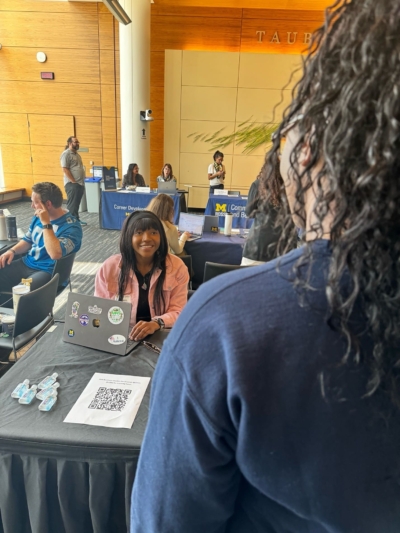
Breezy representing Business Leaders for Diverse Abilities at Ross, where she serves on the board and advocates for inclusive leadership.
A NEW WAY OF DOING THINGS
I chose 100 daily kettlebell swings as my first goal. It lasted until a quick trip back home to New York when I couldn’t find a kettlebell, thus breaking my streak. Rather than adapting to the short-term shift in circumstances, I gave up entirely.
Not making it the full seven days wasn’t completely surprising. But it sure was a wake-up call. It was one that forced me to confront the tendency I have to treat imperfections in my daily routine as irredeemable failures. A defeatist outlook if you will.
So, I started the next challenge with this in mind.
I scheduled deep work early in the morning, before emails or quick wins. The impact was immediate. Tasks I’d been avoiding felt manageable, because I was aligning with my natural energy instead of pushing against it.
Next, I added midday walks as a structured reset point. On the good days, my mood improved and I could work productively for longer.
IMPROVEMENT OVER PERFECTION
Even when I had to adjust the timing or swap the outdoors for a walking pad, the habit stuck, because I finally understood the point. I didn’t need perfection for progress. It was happening either way.
Just like on the ice.
Every Friday at 7 p.m. my two skating partners and I showed up, even when tired or busy with other commitments. We heavily leaned on each other to just see it through to the end.
Although my secret goal of Olympic level skating mastery was completely shattered by class 3, it was refreshing to have some structured self-care. It became both a reprieve from the hustle and a productive hang out hour. Along the way, I stopped thinking of forward and back like a contradiction and started thinking about it like a better path to resilient growth.
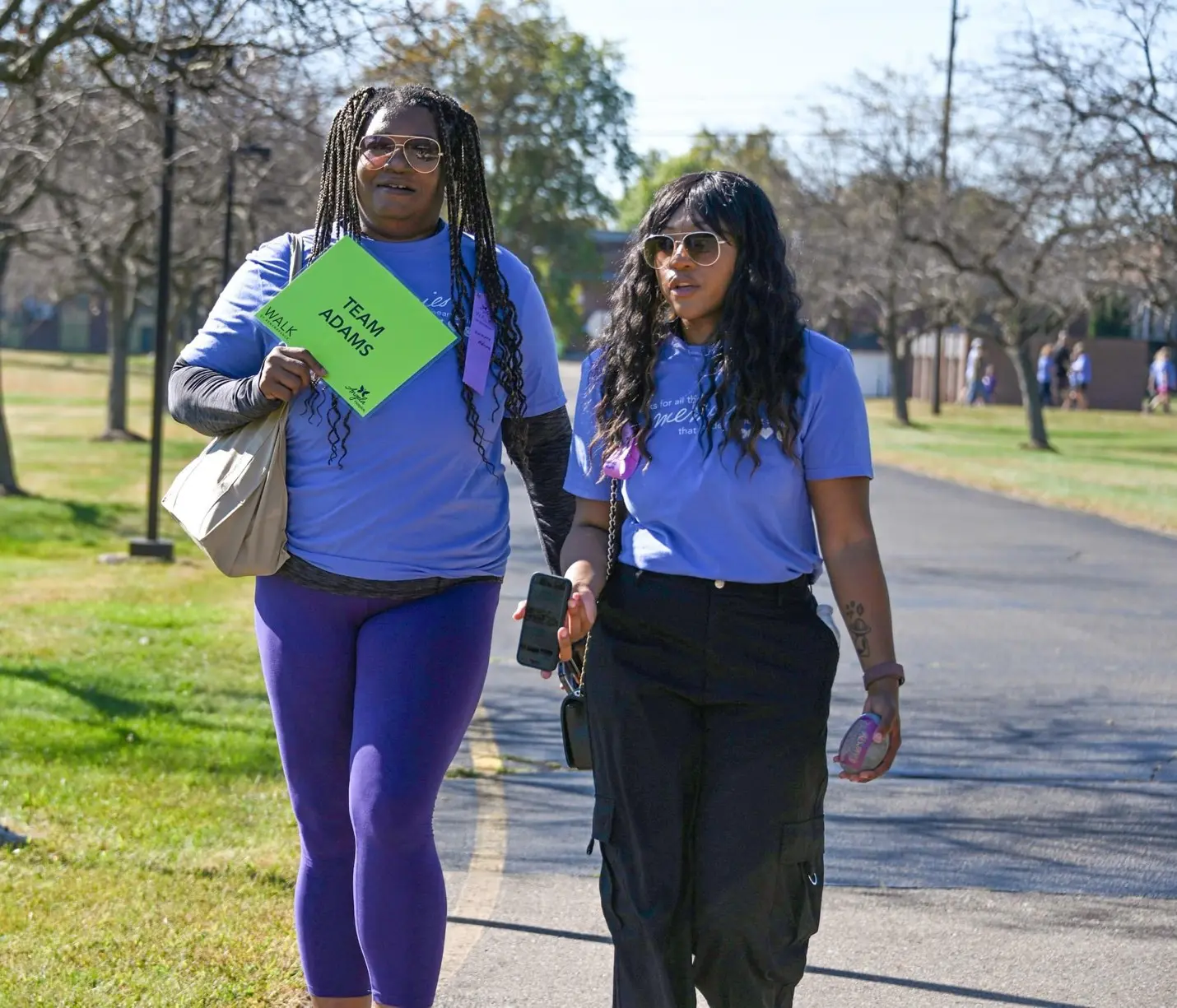
Breezy and her mother on one of their daily afternoon walks in Livonia, Michigan, a shared ritual they continue whenever visiting each other across the country.
THE LEADERSHIP CRISIS CHALLENGE
Ross reinforced that idea through the school’s Sanger Leadership Center programming. The Center treats leadership as a skill anyone can learn. It offers students the tools and space necessary to take ownership of their development and guide themselves through the process.
I first encountered Sanger during the Leadership Crisis Challenge in my second year of law school, before I ever considered Ross as a viable next step. The Challenge throws you into a simulated business crisis and asks you to test your resolve in executive decision-making under pressure as part of a team in C-Suite roles. That year, the scenario involved an autonomous vehicle company facing public backlash after a crash caused by its technology.
Over 48 hours, we navigated increasing media scrutiny, addressed stakeholder concerns, and made real time decisions involving government regulations, public safety, and the company’s future. After working into the evening refining our strategy, we presented it to a board of directors made up of U-M alumni, faculty, and senior leaders from companies like General Motors, Estee Lauder, and Deloitte.
I served as Chief Communications Officer, responsible for addressing the public during a recorded press conference. On the first night, my team developed a strategic response plan while managing both internal updates and external messaging. The next morning, we delivered our recommendations to the board.
My Crisis Challenge experience was immersive and demanding. It pushed me to think about leadership under pressure rather than just in theory.

Breezy with her study abroad cohort during a session at Germany’s world bank headquarters, part of a global learning experience that broadened her leadership perspective.
‘FORWARD AND BACK’
Throughout the Challenge, there were also opportunities to connect with alumni and industry leaders. One of the most impactful moments for me was a one-on-one conversation with JetBlue Airways co-founder Dr. Mike Barger, now the Area Chair of Business Administration at Ross. We spoke about the entrepreneurial path and what it might look like for someone with my background. I left that conversation certain that no matter what comes next, the power was in my hands to define the ultimate goal.
Professor Barger later taught a crisis management course I took last semester called High Stakes Leadership: Building Resilience Through Relationships, where I presented a mock case on JetBlue’s own crisis response to a high-stakes situation. Another example of productive repetition in my journey.
My first experience with Ross crisis management programming, I was a law student with no business background beyond a 10-week law firm internship. Now, three years later, I’ve had four firm experiences, attended an educational session at Germany’s World Bank headquarters, and traveled to India on a government policy trip that included a visit to the Saket District Court, where we met with several senior judicial officials.
I’ve been moving forward constantly. But I only know I’m learning because I’ve had moments to slow down, think back, and reflect.
Forward and back. A powerful lesson indeed.

Breezy and a fellow Michigan summer law firm intern at an escape room in Chicago, taking time to connect beyond the office.
A DIFFERENT UNDERSTANDING OF LEADERSHIP
Another point for Sanger. Last semester, the Center paired me with management consultant and former Human Resources executive and Ross alum Todd Shaw. While seeking advice on balancing my many competing demands, he told me that taking care of myself was no longer optional. That I need to build a foundation to lean on that supports the demands and the self-care.
I had long believed that good leaders were defined by endurance rooted in constant self-sacrifice. Business school challenged that assumption. Effective leaders understand what they need to function well and protect that capacity, even when it doesn’t look impressive or productive to others.
I don’t know that I would’ve accepted this as applicable fact being anywhere else. And it is why Ross, specifically, was the right choice for me, and why pursuing the MBA now has been a timely and meaningful expansion of my journey to becoming a lawyer.
Ross has pushed me to expand my concept of leadership to include the ability to shift and recover and then keep moving forward with intention. The same lesson I learned while ice skating on Friday nights at 7 p.m. with my friends from my cohort.
Born and raised in the city that never sleeps, Breezy has always straddled two worlds. Law and business on one side, storytelling on the other. She earned her B.A. and Master’s in Journalism from the University of North Texas before heading to Michigan for her JD/MBA. At the Law School, she served on the boards of the Student Senate, Black Law Students Association, Mock Trial, and the Organization for Public Interest Students. At Ross, she’s on the board of Business Leaders for Diverse Abilities and takes part in Ross Leaders Academy and Zell Lurie Institute programming. Outside the classroom, Breezy is pursuing an independent study on the modern publishing industry while finishing her first novel, a story that asks what happens when AI collides with the legal world. Wondering how a JD/MBA balances casebooks and networking with world-building? She’ll be sharing the twists, turns, and behind-the-scenes of her creative process this year at substack.com/breezeedoesit.
© Copyright 2026 Poets & Quants. All rights reserved. This article may not be republished, rewritten or otherwise distributed without written permission. To reprint or license this article or any content from Poets & Quants, please submit your request HERE.
link