H&M Marketing Strategy (2025)

The H&M Marketing Strategy is centered on delivering fashion-forward apparel at affordable prices, supported by fast product turnover, global accessibility, and sustainability-driven branding. H&M has built a reputation as one of the world’s leading fast-fashion retailers by blending trend responsiveness with mass-market appeal, ensuring customers can access the latest styles without premium price tags.
Founded in 1947 in Västerås, Sweden, H&M has grown from a single women’s clothing store into a global fashion powerhouse operating in over 70 countries. Its expansion has been fueled by an ability to quickly interpret runway trends into ready-to-wear collections, reaching millions through an extensive network of physical stores and a robust online presence.
What sets H&M apart from competitors like Zara or Uniqlo is its balance between trend accessibility and sustainability initiatives. While maintaining a fast-fashion business model, the company invests in conscious collections, garment recycling programs, and transparency reports—aligning with consumer demands for ethical fashion. This dual focus helps H&M capture both style-conscious shoppers and environmentally aware consumers.
The brand resonates with a universal human desire: self-expression through fashion that feels both current and attainable. In an era where trends shift rapidly and consumer attention spans are short, H&M’s marketing leverages speed, affordability, and inclusivity, ensuring it remains relevant across generations and cultures.
H&M Goals and Objectives
H&M’s marketing and business goals focus on maintaining its fast-fashion leadership while embracing sustainability and enhancing customer engagement. These objectives shape its strategies for global growth, brand differentiation, and long-term relevance.
Expand Global Market Presence: H&M seeks to increase its footprint in both established and emerging markets. This involves opening new stores in high-growth regions and strengthening e-commerce capabilities to reach customers worldwide. For example, entering markets like Vietnam and expanding in India align with its expansion strategy.
Lead in Affordable Trend-Driven Fashion
H&M aims to consistently deliver the latest trends at competitive prices. Rapid design-to-shelf cycles allow the brand to keep collections fresh, satisfying customers’ appetite for novelty without compromising affordability.
3. Strengthen Sustainability Commitments
Through initiatives like the Conscious Collection, garment recycling programs, and a pledge to use 100% recycled or sustainably sourced materials by 2030, H&M integrates environmental goals into its core strategy. These reinforce brand credibility among eco-conscious consumers.
4. Enhance Digital Transformation
Investing in mobile apps, AI-powered style recommendations, and advanced logistics, H&M is streamlining shopping experiences across channels. This objective supports a seamless blend of physical and digital retail.
5. Foster Customer Loyalty
The H&M Membership program offers personalized discounts, early access to sales, and special offers, building repeat purchase behavior. Loyalty is further driven by curated communications tailored to shopping habits.
6. Collaborate for Brand Elevation
Partnerships with designers like Balmain and Moschino position H&M as both accessible and aspirational, attracting customers seeking high-fashion collaborations at mass-market prices.
7. Boost Operational Efficiency
By optimizing supply chains and reducing lead times, H&M can meet market demand faster and more sustainably, supporting both profitability and customer satisfaction.
Together, these objectives enable H&M to compete in the fast-changing fashion landscape while aligning with consumer values and global retail trends.
Who is H&M’s Target Audience?
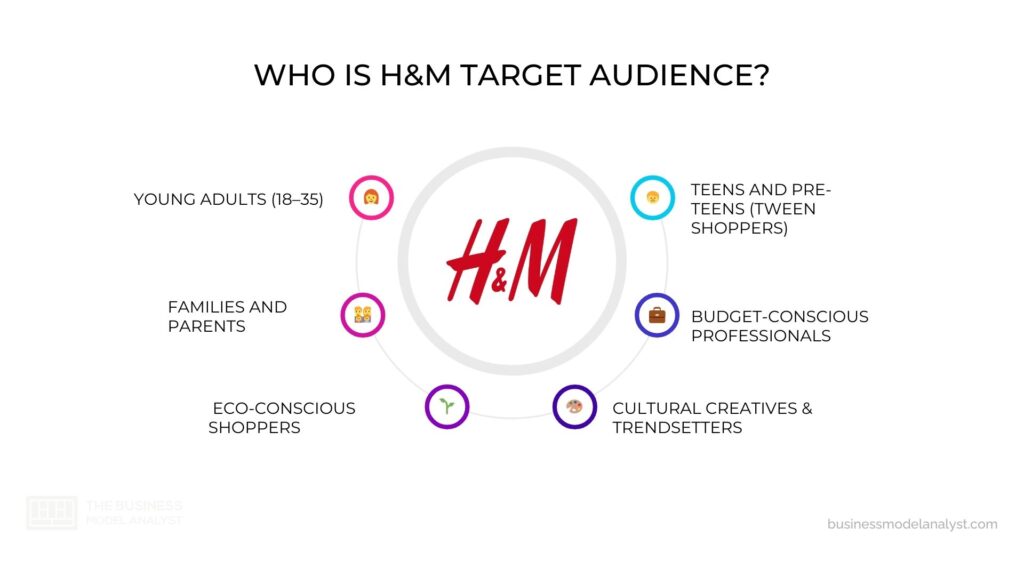
H&M appeals to a broad yet well-defined audience by segmenting customers through demographics, psychographics, geography, and behavioral patterns. This approach enables the brand to tailor offerings and marketing campaigns to distinct lifestyle needs and style preferences.
H&M Demographics
The primary demographic includes men and women aged 16–40, with a strong concentration in Gen Z and Millennials. These consumers often have middle incomes but prioritize fashion and self-expression, making affordability a key factor. H&M’s children’s lines and plus-size ranges extend reach to families and diverse body types.
H&M Psychographics
H&M customers are trend-conscious, socially aware, and value inclusivity. Many seek the latest styles without overspending, and increasingly, they favor brands with environmental responsibility. The Conscious Collection and transparent supply chain reports align with these values.
H&M Geography
With stores in over 70 countries and online shopping in many more, H&M operates in both urban and suburban markets. In Europe and Asia, collections may adapt to cultural norms and seasonal preferences, while in North America, marketing often emphasizes diversity and street-style trends.
H&M Behavior
H&M shoppers exhibit a mix of planned and impulse buying. Many visit frequently to explore new arrivals, driven by the brand’s rapid stock rotation. Loyalty members often engage digitally, using the app for exclusive previews and offers. Customers also respond strongly to limited-edition collaborations, prompting high traffic online and in-store.
By catering to this diverse yet style-focused audience, H&M balances mass appeal with targeted engagement, ensuring relevance in both fashion-forward capitals and emerging style markets.
Marketing Mix of H&M
H&M Product
H&M offers a wide range of fashion-forward products, including clothing, accessories, shoes, and home goods. Its collections span women’s, men’s, children’s, and special lines like H&M Conscious (sustainable materials) and H&M Studio (premium limited editions). Frequent collaborations with luxury designers and celebrities add exclusivity while keeping prices accessible.
H&M Price
The brand follows a competitive pricing strategy, positioning itself as affordable yet fashionable. Core items remain low-cost to attract budget-conscious shoppers, while premium collaborations and limited editions command slightly higher prices. Seasonal discounts, loyalty rewards, and bundle deals further enhance perceived value.
H&M Place
H&M operates over 4,000 stores in high-traffic locations such as shopping malls and city centers, alongside a robust online platform. Its e-commerce sites are localized for different markets, offering currency, sizing, and language customization. Partnerships with delivery services and click-and-collect options bridge online and offline shopping.
H&M Promotion
Promotion blends traditional advertising with strong digital engagement. Social media campaigns on Instagram, TikTok, and YouTube showcase new collections, styling tips, and influencer collaborations. Seasonal campaigns often tie into sustainability narratives or diversity and inclusion themes. In-store events, designer launches, and loyalty member previews create buzz and foot traffic.
H&M’s effective mix of product variety, accessible pricing, global availability, and engaging promotion enables it to remain competitive in the fast-fashion industry while evolving to meet changing consumer expectations.
What are H&M’s Strategies?
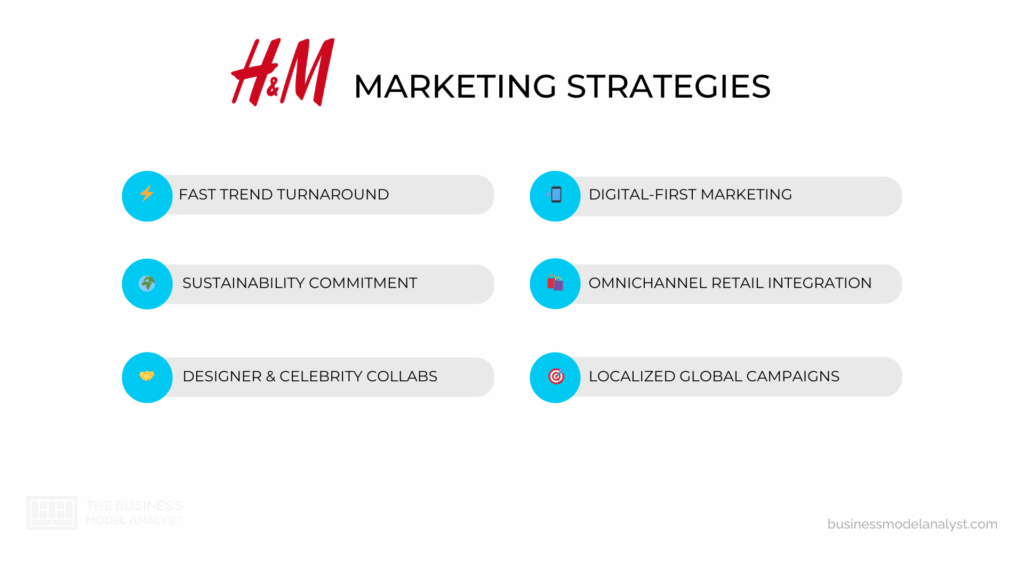
1. Fast Trend Adoption
H&M excels at quickly translating runway and street-style trends into affordable retail collections. This rapid product turnover keeps stores fresh and encourages frequent customer visits.
2. Sustainability Integration
Through the H&M Conscious Collection, garment recycling bins in stores, and a pledge for 100% sustainable materials by 2030, the brand embeds environmental responsibility into its identity, appealing to eco-conscious shoppers.
3. Designer & Celebrity Collaborations
High-profile partnerships with brands like Balmain, Moschino, and Mugler generate excitement, attract media attention, and draw in both loyal customers and new audiences.
4. Omnichannel Retail Experience
H&M integrates physical and digital shopping through mobile apps, click-and-collect, virtual fitting tools, and AI-based recommendations, creating a seamless customer journey.
5. Inclusive Fashion Positioning
The brand promotes diversity in campaigns, offers a broad size range, and creates gender-neutral collections, ensuring inclusivity resonates across global markets.
6. Localized Marketing
While maintaining a consistent global brand image, H&M adapts product assortments, campaigns, and cultural references to align with regional tastes and traditions.
7. Digital-First Campaigns
Social media storytelling, influencer collaborations, and viral hashtag challenges keep H&M connected to younger demographics, especially Gen Z, where style discovery often begins online.
By combining speed, accessibility, and values-driven branding, H&M strengthens its competitive edge while adapting to evolving fashion and consumer expectations.
H&M Channels
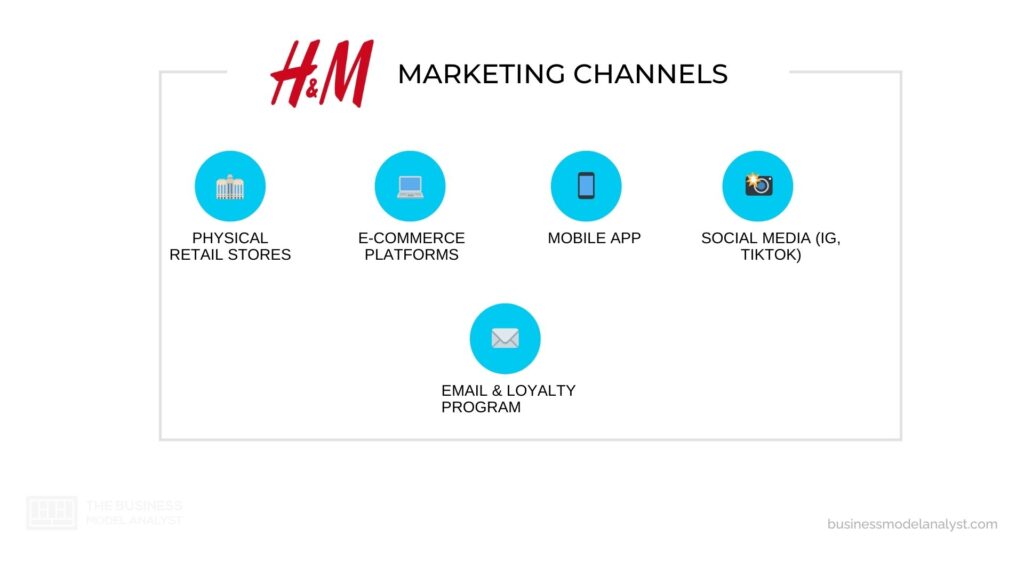
H&M reaches its audience through a multi-channel strategy designed to maximize visibility, convenience, and engagement.
1. Physical Stores
With over 4,000 stores worldwide, H&M places its outlets in prime urban centers, shopping malls, and high-footfall areas. Stores serve as both sales hubs and brand experience spaces, often featuring seasonal displays and collaboration launch events.
2. E-commerce Platforms
H&M’s online stores are localized for language, currency, and sizing. They offer exclusive online collections, early access for members, and flexible delivery or click-and-collect options, catering to digitally savvy shoppers.
3. Mobile App
The H&M app integrates shopping, style inspiration, loyalty rewards, and personalized offers. It also provides push notifications for sales, new arrivals, and sustainability initiatives.
4. Social Media
Platforms like Instagram, TikTok, and YouTube showcase campaigns, styling tips, and influencer collaborations. User-generated content and hashtag challenges encourage customer participation and virality.
5. Email & Loyalty Program
H&M uses targeted email marketing to deliver personalized recommendations and special offers to loyalty members, fostering repeat purchases and long-term engagement.
6. PR & Collaborations
Designer partnerships and celebrity endorsements receive extensive media coverage, amplifying reach beyond traditional advertising channels.
By blending physical, digital, and experiential touchpoints, H&M ensures it can connect with customers wherever they shop or discover fashion trends.
How to Apply H&M Strategies to Your Business
1. Adopt a Rapid Response Model
H&M’s success in fast trend adoption comes from quick design-to-market cycles. Businesses can implement smaller, more frequent product releases to stay relevant. Use trend analysis tools or monitor competitor moves to anticipate shifts and act quickly. This keeps offerings fresh and drives repeat visits.
2. Integrate Sustainability into Your Brand
Just as H&M uses the Conscious Collection to connect with eco-conscious consumers, you can adopt visible sustainability practices—such as recyclable packaging, eco-friendly materials, or buy-back programs. Clearly communicate these efforts to build trust and attract responsible shoppers.
3. Leverage Collaborations for Buzz
H&M’s designer and celebrity collaborations generate excitement. Partner with complementary brands, influencers, or local artists to create limited editions or co-branded campaigns. This expands reach and adds novelty to your offerings.
4. Build an Omnichannel Experience
Ensure customers can move smoothly between online and offline touchpoints. Sync inventory systems, offer click-and-collect, and personalize recommendations through apps or email marketing. This mirrors H&M’s integrated shopping journey and boosts customer convenience.
5. Promote Inclusivity and Diversity
H&M champions inclusivity through diverse campaigns and product ranges. You can reflect this by using inclusive marketing imagery, offering a broader size or product range, and representing different cultures and lifestyles in your brand narrative.
6. Localize While Staying Consistent
H&M adapts its collections and campaigns to local markets without losing its global identity. For your business, adjust product names, visuals, or features to fit cultural preferences while keeping a consistent core brand voice.
7. Prioritize Digital-First Marketing
H&M reaches younger consumers through TikTok challenges, Instagram drops, and influencer collaborations. Adopt a similar digital-first approach—create shareable content, leverage trending topics, and interact with customers in real time to increase engagement.
By combining speed, sustainability, collaborations, and digital engagement, you can capture attention, build loyalty, and keep your brand relevant—just as H&M has done in the fast-paced fashion market.
Conclusion
H&M’s marketing strategy demonstrates how speed, accessibility, and values can coexist in a competitive industry. By combining fast-fashion agility with sustainability commitments, designer collaborations, and a strong digital presence, the brand remains relevant to style-conscious and socially aware consumers worldwide.
Its ability to adapt—whether to new market trends, technological innovations, or cultural shifts—has kept H&M at the forefront of global retail. The company’s focus on inclusivity and localization ensures resonance across diverse audiences, while its omnichannel approach delivers convenience and engagement at every touchpoint.
For businesses, H&M serves as proof that balancing trend responsiveness with brand purpose can create both short-term excitement and long-term loyalty. In a fast-moving market, the lesson is clear: those who innovate quickly, connect authentically, and stay true to evolving consumer values will thrive.
link