Resilient Business Models Can Outperform Growth-At-All-Costs Strategies

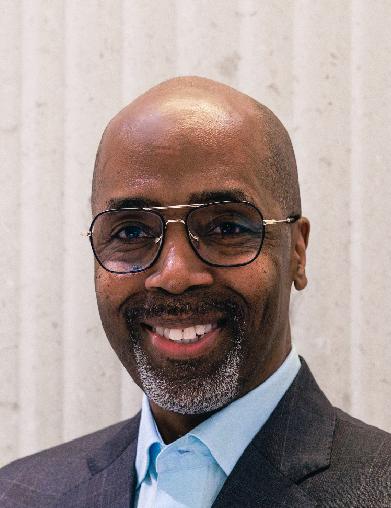
Matt Levin is the CEO of Modern Health.

For the past two decades, many companies have been driven by a single mandate: growth at all costs. Venture capital poured into industries with businesses that could scale fast, even when long-term viability was unclear. But there’s a high price with this approach: eroding margins and deteriorating customer engagement and trust.
From my experience leading organizations across healthcare and HR technology, I’ve seen how tempting it is to chase scale without building the fundamentals to sustain it. But early wins can mask structural weaknesses, and when the market shifts, those weaknesses are exposed. In the mental health industry, where I currently operate, many companies rushed into “therapy-first” models that funneled clients to the most expensive and resource-constrained option. It looked like a fast path to growth, but it was never sustainable. The result has been unsurprising: unpredictable costs, access bottlenecks and outcomes that fall short of expectations.
This isn’t unique to healthcare. Across industries, the challenge is building a business model that strikes a balance between growth and long-term sustainability. Today, customers, investors and boards are no longer impressed by unchecked growth curves that mask structural instability. They want predictability, accountability and assurance that an organization’s model is sustainable and resilient. As CEOs, it’s time to ask a harder question: Is our business designed for endurance, or just unsustainable expansion?
The Downside Of Hypergrowth
An important lesson from the past decade is that hypergrowth can distract leaders, especially those serving enterprise clients, from the fundamentals of profitability, customer value and long-term strategy. When I was at Aon and later Benefitfocus, I noticed that customers don’t simply buy products; they buy predictability and outcomes. They want the confidence that you’ll be there in 5, 10 or 20 years and still fulfil their promises.
The blitzscaling and “move fast and break things” ethos have resulted in lost opportunities, unsustainable cash-flow issues, frustrated clients and business failures. According to McKinsey, companies with resilient models delivered higher shareholder returns over a 10-year period than their peers. The clear lesson here is that stability and endurance create more long-term value than rapid, unsustainable expansion, in hopes of an exit.
4 Principles For Sustainable Models
For business leaders who want to focus on resilience, here are four principles that will guide them to success.
1. Price your product/service for predictability.
Most of my career has been in annual accruing revenue (ARR) B2B businesses, where gross revenue retention (GRR) is the most important financial metric. A growing ARR business with high GRR is naturally attractive to all types of investors. They’re viewed as sturdy, ratable and easier to underwrite than more volatile models. In today’s environment, CEOs must focus on predictable pricing models that help clients forecast cost, while ensuring continuity of service delivery and delivering on what was sold to them. That means eliminating volatility through transparency, consistency and ensuring reasonable profit margins.
Undercutting on price may create short-term gains in winning a deal, but it almost always leads to long-term instability for the business and future price hikes for customers. This ultimately affects trust, satisfaction and retention. There’s nothing worse than a renewal that a client wasn’t prepared for, particularly after extreme price actions were deployed to win them in the first place. It’s bad for the client, and it’s bad for the industry.
Smart leaders know pricing isn’t just about revenue. It’s about building an enduring business that lets customers plan with confidence. More than two-thirds of employers identify cost predictability as central to their workplace benefits strategy, highlighting the demand for transparency and stable budget planning. Across sectors, the same principle applies. Predictability in both outcomes and costs earns trust and durable partnerships with customers. Ask yourself whether your customers can forecast pricing with confidence.
2. Design for long-term risk, not short-term wins.
The fastest way to weaken a model (and its industry) is to overuse its scarcest inputs. In the mental health industry, many patients are sent to therapy or psychiatry, regardless of needs or preferences. Instead, that level of care should be reserved for those with clinical needs, while effective and proven alternatives like telehealth or collaborative care access are offered to those with less severe needs. Most industries have their equivalent. You wouldn’t send someone with a minor scratch to a surgeon or deploy your most senior engineers to resolve basic support tickets. It’s an inefficient and unnecessarily costly use of limited resources.
The best leaders anticipate and manage constraints, such as supply-demand imbalances, and create business models that support the industry in the long term. Consider whether you overly rely on a limited resource that threatens future stability.
3. Prove—don’t just promise—outcomes.
Are you validating your business’ impact? Durable companies back their promises and hold themselves accountable with real evidence. In healthcare, that means peer-reviewed studies, actuarial ROI or existing frameworks like the Quintuple Aim or the American Medical Association’s Return on Health framework. Elsewhere, it may mean audited metrics, independent validation or transparency in performance data.
4. Invest in prevention, not just intervention.
Sustainable models anticipate problems before they escalate into more costly crises. Whether it’s addressing employee stress before it becomes clinical depression, requiring more costly and frequent interventions or identifying small operational inefficiencies before they escalate, prevention is a hallmark of durability. Ask, “Are we preventing issues instead of solving them?”
I’ve been fortunate to work in companies at very different stages of growth and have the benefit of more than two decades of experience in my industry. In every context, one truth holds: Businesses without resilience and durable models eventually collapse and, in some cases, can even bring an industry down with them. The leaders who will be most successful over the next decade aren’t those who chase growth at all costs. They’ll be the ones building strong, sustainable models focused on predictability, retaining customers and creating long-term value.
Forbes Business Council is the foremost growth and networking organization for business owners and leaders. Do I qualify?
link